Wisdom from Chinese Literary and Buddhist Classics
365 Days for Travelers
9/25: THE I CHING (EXCERPT)
King Wen of Zhou (Approx. 1152 BCE - 1056 BCE, Shang Dynasty)English translation: James Legge
If acts of goodness be not accumulated, they are not sufficient to give its finish to one’s name; if acts of evil be not accumulated, they are not sufficient to destroy one’s life.
The superior man learns and accumulates the results of his learning; puts questions, and discriminates among those results; dwells magnanimously and unambitiously in what he has attained to; and carries it into practice with benevolence.
Things with the same tonality resonate together; things with the same material force seek out one another. Water flows to where it is wet; fire goes toward where it is dry. Clouds follow the dragon; wind follows the tiger… Thus each thing follows its own kind.
── from I Ching
(Book of Changes)
SELECTIONS FROM THE ART OF WAR
Sunzi (Approx. 545 BCE - 470 BCE , Spring and Autumn Period)English translation: Lionel Giles
ATTACK BY STRATAGEM (EXCERPT)
If you know the enemy and know yourself, you need not fear the result of a hundred battles. If you know yourself but not the enemy, for every victory gained you will also suffer a defeat. If you know neither the enemy nor yourself, you will succumb in every battle.
WEAK POINTS AND STRONG (EXCERPT)
Military tactics are like unto water; for water in its natural course runs away from high places and hastens downwards. So in war, the way is to avoid what is strong and to strike at what is weak. Water shapes its course according to the nature of the ground over which it flows; the soldier works out his victory in relation to the foe whom he is facing. Therefore, just as water retains no constant shape, so in warfare there are no constant conditions. He who can modify his tactics in relation to his opponent and thereby succeed in winning, may be called a heaven-born captain. The five elements (water, fire, wood, metal, earth) are not always equally predominant; the four seasons make way for each other in turn. There are short days and long; the moon has its periods of waning and waxing.
── from Sunzi Bingfa (The Art of War)
What's New?
SEPTEMBER
Humble Table, Wise Fare
INSPIRATION
Recorded by Leann Moore
Hope can set your mind on tomorrow;
action must be carried out today.

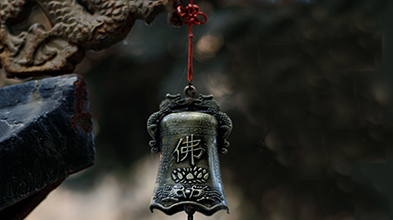


Dharma Instruments
Venerable Master Hsing Yun grants voices to the objects of daily monastic life to tell their stories in this collection of first-person narratives.

Sutra of the Month
The Heart Sutra is a short sutra, commonly chanted individually or in groups, that contains the core teachings on prajnaparamita, or the “perfection of wisdom.” The sutra is short, at only 260 Chinese characters. Included is an English translation of the sutra’s meaning, followed by the Chinese characters and their pronunciation

Newsletter
What is happening at Hsingyun.org this month? Send us your email, and we will make sure you never miss a thing!